
Introduction: Why “Zopiclone BNF” Is Trending in 2026
Search interest in Zopiclone BNF has grown significantly in 2026 as more patients look for reliable, official guidance before starting sleep medication. Rather than relying on forums or promotional content, people are turning to the British National Formulary for evidence-based recommendations.
The term Zopiclone BNF signals trusted UK prescribing standards. Whether you are a patient researching insomnia treatment or a healthcare professional reviewing hypnotic guidance, understanding Zopiclone BNF advice is essential.
This blog provides a detailed, plagiarism-free overview of Zopiclone BNF dosage, duration limits, side effects, warnings, and comparison with other sleep medicines.
What Is Zopiclone According to BNF?
Under Zopiclone BNF classification, zopiclone is listed as a non-benzodiazepine hypnotic (commonly known as a “Z-drug”). It works by enhancing GABA activity in the brain, helping to reduce sleep latency and nighttime awakenings.
According to BNF Zopiclone, it is indicated for:
- Short-term treatment of severe insomnia
- Situations where insomnia causes marked distress
- Cases where non-drug approaches have been insufficient
A key theme throughout Zopiclone BNF guidance is that hypnotics should only be used when necessary and for the shortest possible duration.
Zopiclone BNF Recommended Dosage (Adults & Elderly)
One of the most searched phrases online is Zopiclone BNF dosage.
Based on Zopiclone BNF recommendations:
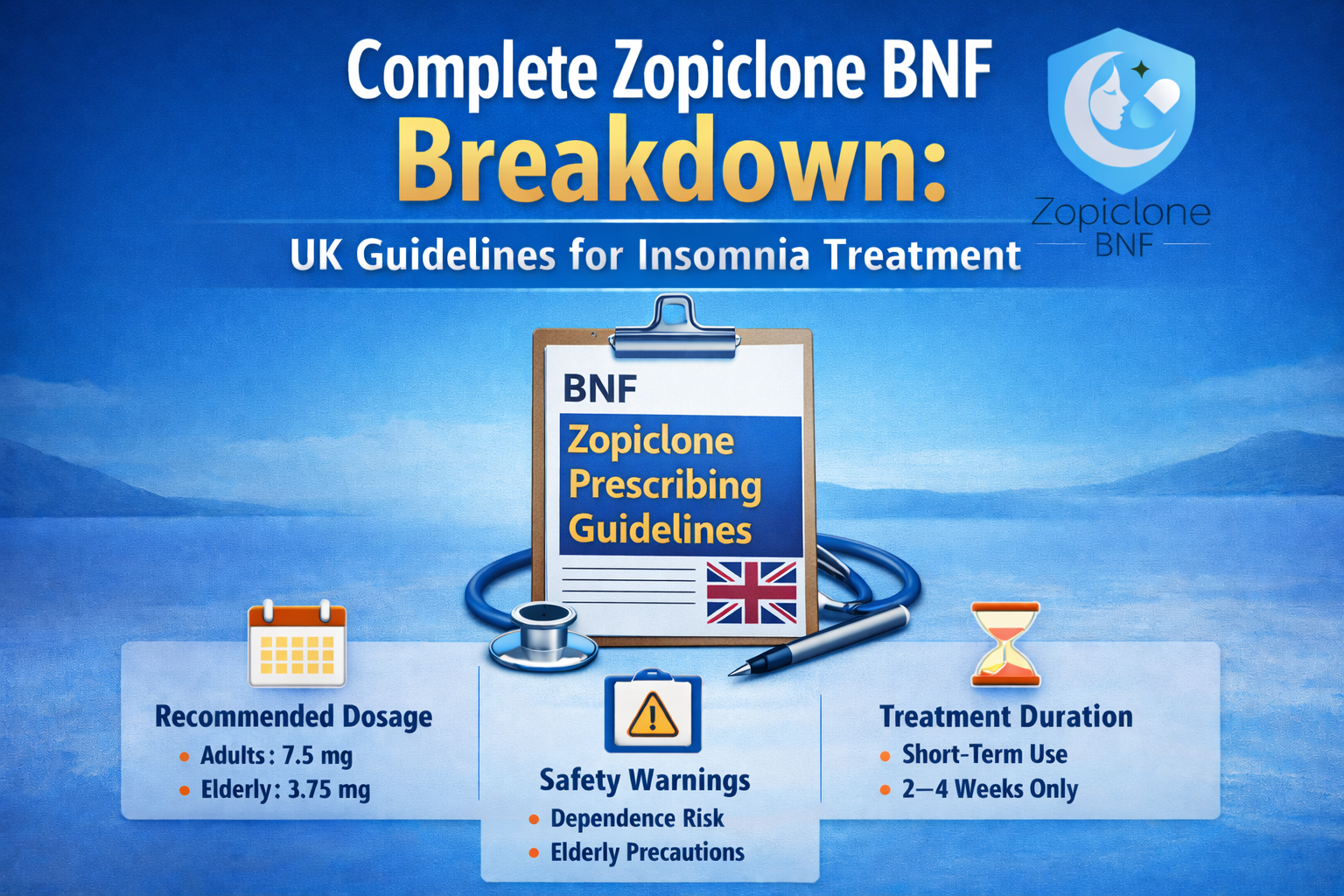
- Adults: 7.5 mg at bedtime
- Elderly: 3.75 mg at bedtime initially
- Liver impairment: Lower starting dose recommended
The reason BNF Zopiclone suggests a reduced dose in older adults is increased sensitivity to sedative effects. Higher doses may raise the risk of confusion, falls, and daytime drowsiness.
The Zopiclone BNF also emphasises taking the medication immediately before going to bed and ensuring a full night (7–8 hours) is available for sleep.
Zopiclone BNF Treatment Duration: Why Short-Term Only?
Another highly searched topic is Zopiclone BNF treatment length.
The official Zopiclone BNF recommendation is:
- Treatment usually limited to 2–4 weeks, including tapering
This restriction exists because prolonged use increases risks such as:
- Tolerance
- Psychological dependence
- Physical dependence
- Rebound insomnia
The Zopiclone BNF clearly states that long-term continuous use is not generally recommended unless under specialist supervision.
Zopiclone BNF Side Effects Profile
When reviewing Zopiclone BNF side effects, the most common reported reaction is:
- Metallic or bitter taste
Other side effects listed in Zopiclone BNF include:
- Dry mouth
- Drowsiness
- Dizziness
- Headache
Less common but important adverse effects noted in Zopiclone BNF:
- Confusion (especially in elderly patients)
- Hallucinations
- Mood changes
- Memory disturbance (amnesia)
Understanding Zopiclone BNF side effect guidance helps patients recognise when to seek medical advice.
BNF Zopiclone Warnings & Precautions
The Zopiclone BNF includes important cautions for certain patient groups:
- Individuals with a history of substance misuse
- Severe respiratory insufficiency
- Sleep apnoea syndrome
- Severe hepatic impairment
According to Zopiclone BNF, hypnotics should be prescribed carefully in patients with depression, as symptoms may be masked.
There is also a warning in Zopiclone BNF about complex sleep behaviours, including sleep-walking or performing activities while not fully awake.
Zopiclone BNF and Dependence Risk
A major reason Zopiclone BNF is trending relates to concerns about dependency.
The BNF Zopiclone highlights that risk increases with:
- Higher doses
- Long-term use
- Previous alcohol or drug misuse
Withdrawal symptoms mentioned in Zopiclone BNF may include:
- Anxiety
- Irritability
- Restlessness
- Rebound insomnia
To reduce these risks, Zopiclone BNF recommends gradual dose reduction rather than abrupt discontinuation.
Zopiclone BNF vs Other Hypnotics
Patients frequently compare Zopiclone BNF information with other sleep medications such as:
- Zolpidem
- Temazepam
- Melatonin
Within Zopiclone BNF, zopiclone is positioned as an effective short-term hypnotic with similar efficacy to other Z-drugs. Benzodiazepines such as temazepam may carry higher risks of dependence and next-day sedation.
The Zopiclone BNF provides structured guidance so prescribers can select the most appropriate therapy based on individual patient risk factors.
Zopiclone BNF and Driving Safety
Another important section within Zopiclone BNF concerns psychomotor impairment.
Patients are advised to:
- Avoid driving if feeling drowsy
- Avoid alcohol
- Ensure adequate sleep duration
The Zopiclone BNF supports informing patients about next-day impairment risks, especially if sleep duration was insufficient.
Why Zopiclone BNF Searches Continue to Rise
There are several reasons the term Zopiclone BNF continues trending in the UK:
- Increased public awareness about sleep medication safety
- Concerns about dependence
- Greater interest in official prescribing standards
- Growth of evidence-based healthcare research
People are increasingly seeking authoritative medical sources. The Zopiclone BNF represents the UK’s recognised reference for prescribing practice, which explains its rising search popularity.
Key Takeaways from Zopiclone BNF Guidance
The most important messages from Zopiclone BNF include:
- Use the lowest effective dose
- Limit treatment to short duration
- Monitor elderly patients closely
- Taper gradually to avoid withdrawal
- Evaluate underlying causes of insomnia
Understanding Zopiclone BNF recommendations empowers patients to have informed discussions with their GP or pharmacist.
Conclusion
The growing interest in Zopiclone BNF reflects a shift toward informed, safety-focused healthcare decisions. As insomnia remains a widespread issue in the UK, many individuals are reviewing official prescribing guidance before starting treatment.
The Zopiclone BNF remains the gold standard reference for safe and responsible hypnotic prescribing. While it provides valuable information, treatment decisions should always be made in consultation with a qualified healthcare professional.
By understanding Zopiclone BNF dosage limits, duration advice, safety warnings, and dependence risks, patients can approach insomnia treatment with greater awareness and confidence.
Leave a Reply